Don’t stop at the first spin.
Gacha games have a rich history. Most people were introduced to the genre through Genshin Impact in 2020, but the genre itself has been around since the early 2010s, with its roots in Japanese capsule toy vending machines . Banner spins, limited characters, and the fear of missing out on events are all the result of years of evolution in one of the most profitable monetization formats in the history of mobile gaming.
What is “gacha” anyway?
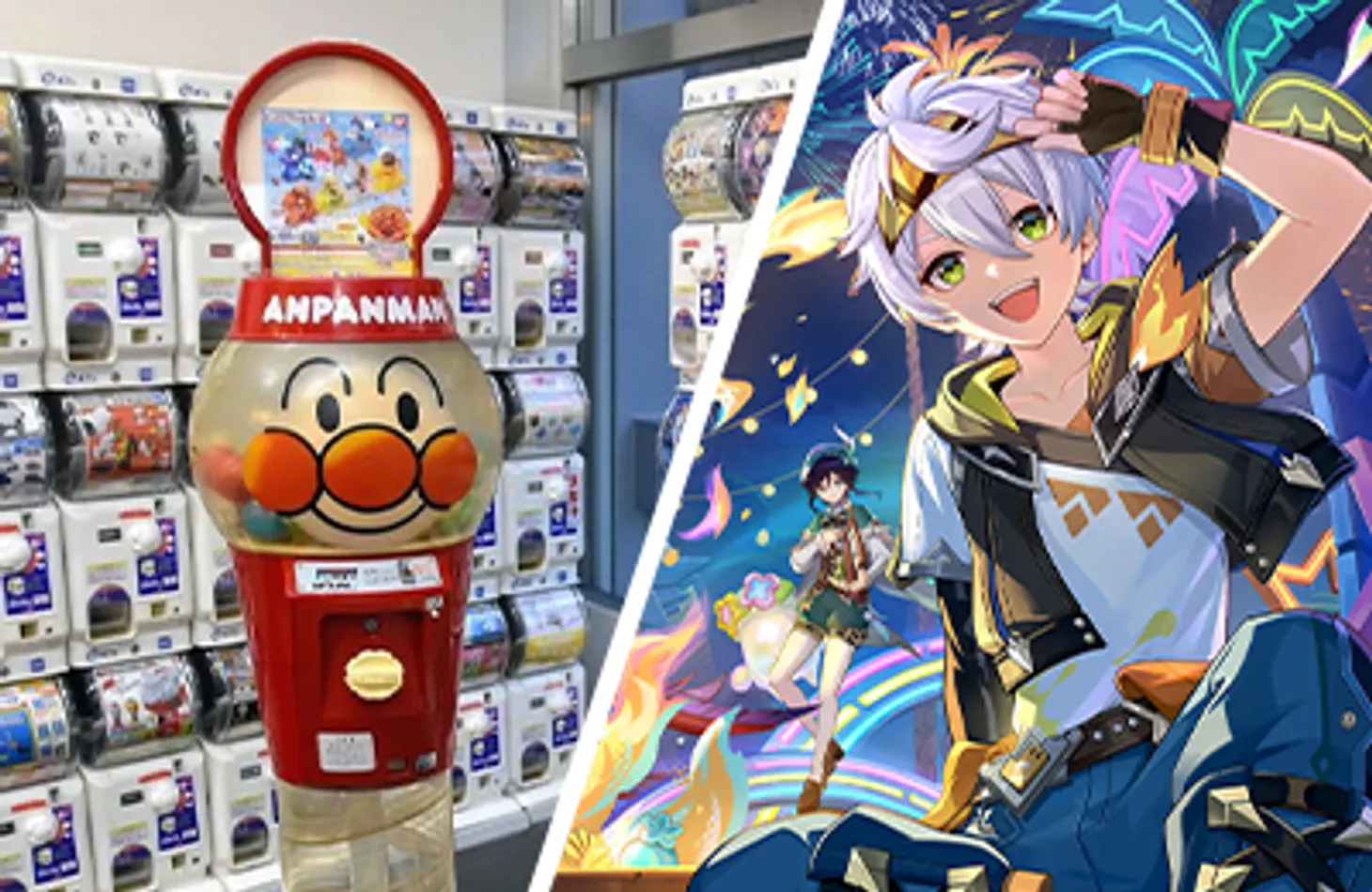
“Gacha” is a Japanese onomatopoeia. ” Gashapon” (ガシャポン) is made up of two sounds: “gacha” is the grinding sound of the machine’s handle, and “pon” is the sound of the capsule hitting the tray . Capsule machines were invented in the United States in the 1880s, initially as simple gumball machines, and were brought to Japan in 1965. In 1977, Bandai registered the Gashapon trademark and began producing capsules featuring anime and manga characters, which dramatically increased the machines’ popularity. Currently, there are approximately 360,000 of these machines in Japan.

Konami brought the “pay and get a random prize” mechanic to digital formats back in 2010. Dragon Collection, a card game for the Japanese social network GREE, featured characters earned through random draws using real money. By the end of the year, the game had amassed around 20 million users and earned over a billion dollars . Players and journalists began sarcastically comparing the mechanics to vending machines outside stores, and the term “gacha” was coined.
Other publishers quickly drew conclusions. The genre’s growth immediately attracted the attention of regulators . In 2012, Japan was the first to impose restrictions, banning “Kompu Gacha”—a system where players had to assemble a set of random items to obtain an even rarer prize. This was deemed a violation of lottery laws. Other countries followed suit later, with their own complaints: China required developers to publicly disclose item drop rates, and in January 2025, the creator of one of the largest gacha games signed a $20 million settlement with the US Federal Trade Commission after being accused of collecting children’s data without parental consent and marketing loot boxes to minors.
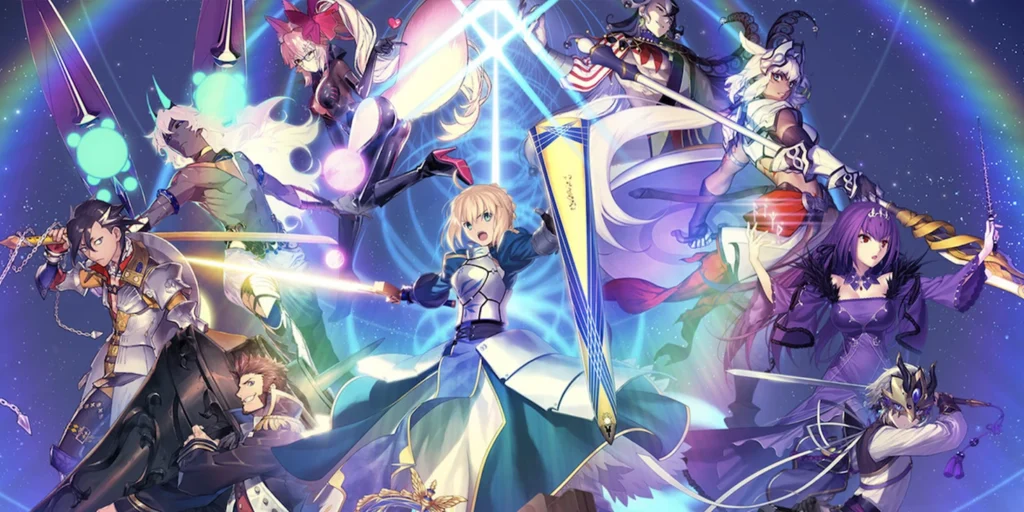
Several games have shaped the genre. Puzzle & Dragons (Gung Ho, 2012) became the first major hit since Dragon Collection and has grossed nearly $8 billion worldwide. Fate/Grand Order (Aniplex, 2015) appealed to the Fate franchise and earned nearly a billion dollars annually. Genshin Impact (HoYoverse, 2020) transformed the genre by introducing an open world, cinematic storytelling, cross-platform play, and global reach.
After Genshin, the market was swept by a wave of clones. Studios around the world tried to replicate the successful formula, but most quickly lost their audience. Today, new games have to compete not only with each other but also with constant updates to long-running titles. The first game to seriously challenge Genshin was Wuthering Waves from Kuro Games (2024), with faster, more skill-demanding combat and one of the most generous gacha systems in the genre. Its animation quality remains unmatched on the market.

However, in 2025, several studios went even further and abandoned gacha mechanics altogether. NetEase announced that their upcoming urban RPG, Ananta, would not feature random character giveaways: all characters are unlocked for free as the story progresses, and the studio plans to make money from cosmetics such as clothing, vehicles, and decorations. In an interview with Famitsu, producer Ash Qi explained that gacha would inevitably prioritize new characters over existing ones, and the team wanted to ensure each character remained relevant .
Around the same time, Duet Night Abyss removed the character gacha shortly before release: according to producer Deca Bear, after several beta tests, complaints about the system were too consistent to ignore.
The regulatory environment is also weighing on studios’ decisions. In December 2023, China issued a draft law that would require retailers to set spending limits and allow direct purchases of items, bypassing lotteries. Tencent and NetEase shares immediately fell by 10-25%, and in early 2024, the listings quietly disappeared from the agency’s website without official comment. Whether this means anything more remains unclear.
How it works (and why)
Gacha games have a simple design: you spend in-game currency on a random draw in a special banner, receiving a character, weapon, or item. The probabilities are fixed, and rare items drop, guess what, rarely.

Over time, studios added variations . The “pity” system grants a rare item after a certain number of unsuccessful spins—in Genshin Impact, the threshold is 90 attempts. Temporary banners with increased chances for specific characters appear regularly. There’s also a closed pool with a fixed set of rewards: each item drawn disappears from it, and the chance for the remaining ones gradually increases.
The principle of variable reinforcement underlies all this . It was studied by psychologist B.F. Skinner back in the mid-20th century: in his experiments, animals pressed a lever for food. When the reward was unpredictable, the subjects pressed the lever significantly more often. Gacha works in exactly the same way: you don’t know when the desired symbol will land, so you keep spinning. Each attempt activates the dopamine system: pleasure is provided not only by the win itself, but also by the anticipation .

FOMO—the fear of missing out—is also added to this . The character will disappear from the banner after a week, and the player is no longer playing for fun, but to avoid regret later. Power creep creates an additional incentive: each new character is often stronger than the previous ones, and players are tempted to pick them simply for their effectiveness. This creates a double pressure: either they play because they’ll fall behind in content without them, or because they’re attracted to them personally.
Emotional attachment is another player in this manipulative game . Unlike random loot in other games, gacha sells characters: each hero has a story, a voice, and a personality. The player spends hundreds of hours with them, following their fate through the story and anticipating new arcs.
In 1956, sociologists Donald Horton and R. Richard Wall described in the journal Psychiatry how television viewers began to perceive on-screen characters as almost real-life acquaintances, calling this a parasocial relationship—a one-way connection in which a person feels close to someone who is unaware of their existence. Developers have long since learned to monetize this phenomenon.

For example, in late 2025 and early 2026, HoYoverse introduced characters with distinct personal attachments to the protagonist in three of its games: Cyrene in Honkai: Star Rail , Ye Shunguan in Zenless Zone Zero , and Columbine in Genshin Impact. The latter character’s situation is more ambiguous, and the relationship with her is presented more in the form of hints. Although much of the community disliked the aggressive marketing, none of the games experienced a decline in revenue during those months.
The “whales”—players who spend sums on gacha that are incomparable to regular games—also rely on the attachment of these players. Analysts estimate that whales make up 1-2% of the audience but account for the majority of revenue. There have been cases of a single player spending over $10,000 on a single game; others have spent six figures.

The numbers speak for themselves. According to analytics portal Sensor Tower, Genshin Impact earned $66 million in January 2026, Love and Deepspace $35.7 million, and Fate/Grand Order $33.7 million. And the brand-new gacha game Arknights: Endfield, released on January 22, grossed $29.5 million in just 10 days. Datahorizzon Research estimates that the gacha game market as a whole will reach approximately $22.5 billion by 2024.
Where to start?
The genre has its pros and cons. Gacha games regularly release a wealth of free content, interesting characters, and vibrant communities. However, they’re also great at wasting time—the only resource that doesn’t replenish. It’s important to be mindful of how you spend it.
If you still want to give it a try, here are a few games that are a good place to start.
Genshin Impact is the easiest entry point: plenty of free content, a clear progression system, and a vast open world. Honkai: Star Rail operates on a similar model, but with turn-based combat and a lower entry barrier, making it suitable for those with limited time. Arknights: Endfield combines an action RPG with team-based combat and a factory simulator where you can build automated production chains. Wuthering Waves is praised for its skill-based combat, easy open-world exploration, and user-friendly approach.
There are also more niche, but no less interesting projects. Limbus Company from the Korean studio Project Moon is a dark tactical RPG with an unexpectedly deep narrative and one of the most generous systems for free-to-play players in the genre. Reverse: 1999 is a card-based tactics game with a 20th-century aesthetic and nonlinear time travel. Fans love it for its character design and serious approach to storytelling.
The list goes on and on: the genre is vast, and something new appears every year. If you haven’t encountered gacha before, you’ll now understand what I’m talking about.